
All Blog

Heavy Copper PCB: Copper Thickness, Manufacturing Challenges and Applications
When a PCB needs to handle higher current or deal with more heat than a standard board can comfortably manage, thicker copper may be a better choice. This is where heavy copper PCB technology comes in. By using thicker copper on the inner or outer layers, a PCB can carry more current and provide a…
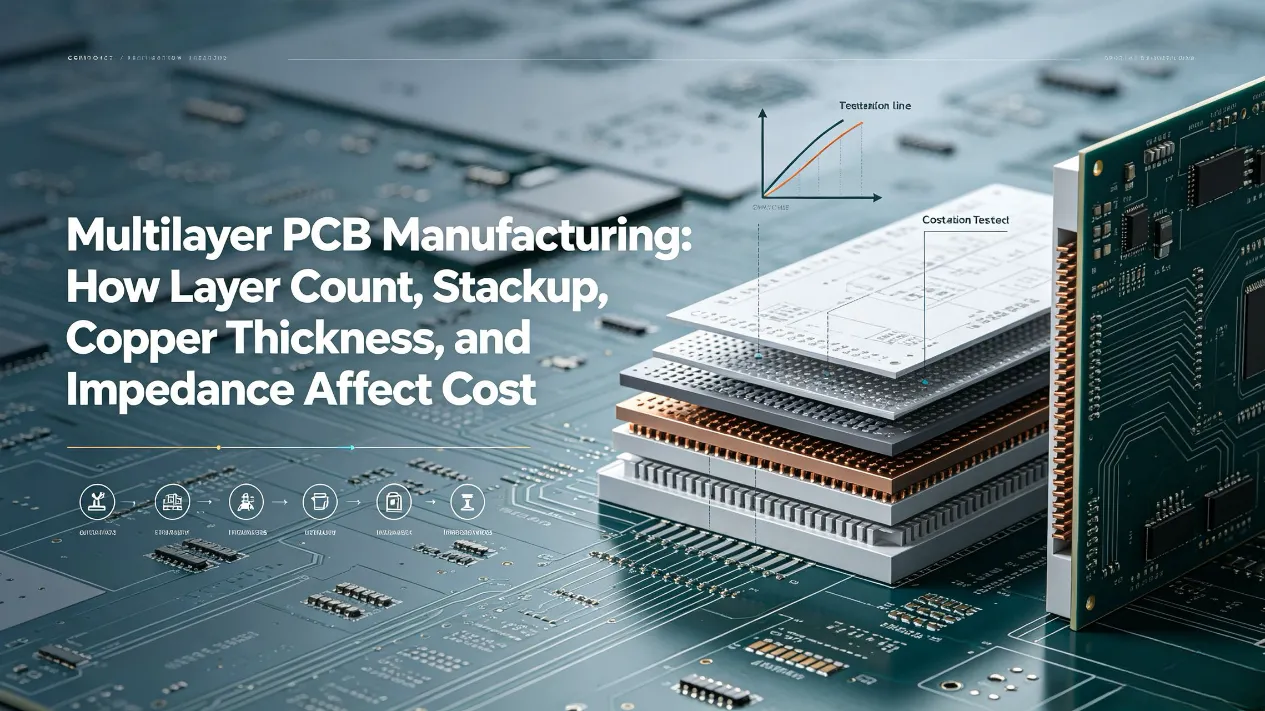
Multilayer PCB Manufacturing: How Layer Count, Stackup, Copper Thickness, and Impedance Affect Cost
Why does the cost of a multilayer PCB vary so much between different designs? When engineers or procurement managers compare quotes for multilayer boards, they often find significant price gaps even for designs that appear similar on the surface. The reality is that multilayer PCB pricing is never determined by layer count alone. The cost…

Beyond the Multimeter: 7 Advanced PCB Testing Methods Used by Jerico Before Shipping
Ask any hardware engineer about their favorite benchtop tool, and they’ll point to the digital multimeter. It’s the ultimate diagnostic gadget. You use it every day to check power rails, listen for that familiar continuity beep, and hunt down quick short circuits. So, where’s the paradox? A multimeter is a savior on your workbench, but…
Anti-CAF PCB Design & Manufacturing: How to Prevent Conductive Anodic Filament Failure
1. What is Conductive Anodic Filament (CAF) Failure? Conductive Anodic Filament (CAF) formation is an electrochemical process that leads to internal electrical shorts within a Printed Circuit Board (PCB). Under continuous DC bias voltage and high humidity, copper ions migrate along microscopic gaps between glass fibers and the epoxy resin substrate, moving from the anode…

From Gerber to Finished PCBA: The 7 Quality Inspection Steps Every Board Must Pass
In PCB and electronics manufacturing, relying solely on end-of-line inspection is a risky business. Hidden issues like cold solder joints or short circuits can bypass basic checks and trigger major product failures once deployed. For OEMs, that means costly replacements, warranty headaches, and damaged reputation Last month, a client came to us after losing $25,800…