
All Blog
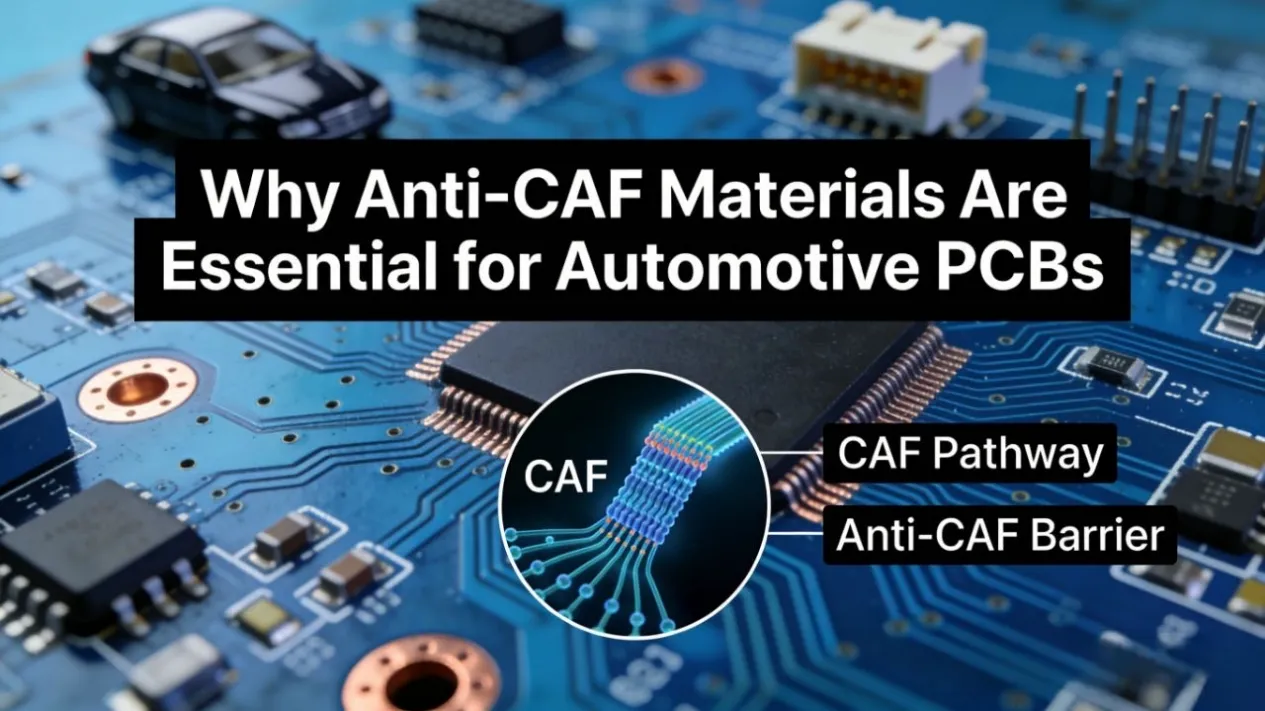
Why Anti-CAF Materials Are Essential for Automotive PCBs
As automotive electronics continue to evolve, the reliability requirements for printed circuit boards (PCBs) have become significantly more demanding. Modern vehicles now integrate a wide range of electronic systems, including advanced driver assistance systems (ADAS), engine control units (ECUs), battery management systems (BMS), and vehicle communication modules. These systems rely heavily on high-performance PCBs that…

Why More Engineering Teams Are Choosing Lead‑Free & Fast‑Turn PCB Prototyping
In today’s global electronics landscape, balancing environmental compliance, rapid development, and cost efficiency has become a daily challenge for design engineers and NPI managers. Projects destined for the U.S. or Europe often face strict RoHS and REACH audits. Yet many teams still rely on tin‑lead finishes, resulting in delayed approvals, failed audits, and unplanned redesigns….
FR4 HiTg170 4-Layer PCB: How to Build Reliable High-Temperature, High-Power Designs
Why Should Engineering Teams Seriously Evaluate FR4 HiTg170 4-Layer PCBs? Engineering teams working on motor control, power conversion, automotive controllers, LED drivers and telecom equipment are constantly fighting a triple constraint: high temperature, high power density and aggressive cost targets. In many of these applications, the environment sits in the 80–125 °C range for long periods,…
Standard FR4 Single-Sided PCB: How to Maximize Reliability and Cost Performance with 1L FR4 Hoz Copper
Why Do Engineering Teams Need to Reconsider the Value of a Standard FR4 Single-Sided PCB? Many hardware teams today instinctively jump to multi-layer or HDI designs as soon as a new project is kicked off, even when the actual requirements do not justify that level of complexity. A simple 1‑layer FR4 board with Hoz copper…
Lead-Free HASL Prototyping: How to Balance RoHS Compliance, Cost, and Speed for FR4 Single-Sided PCBs
What Is Driving the Shift to Lead-Free HASL and Fast PCB Prototyping? For most hardware teams targeting Europe or North America, staying on traditional Sn‑Pb HASL finishes is no longer a safe default. Regulatory pressure from RoHS and REACH, together with customer factory audits, is pushing even relatively simple products toward lead-free surface finishes as…