
All Blog
Lead-Free HASL Prototyping: How to Balance RoHS Compliance, Cost, and Speed for FR4 Single-Sided PCBs
What Is Driving the Shift to Lead-Free HASL and Fast PCB Prototyping? For most hardware teams targeting Europe or North America, staying on traditional Sn‑Pb HASL finishes is no longer a safe default. Regulatory pressure from RoHS and REACH, together with customer factory audits, is pushing even relatively simple products toward lead-free surface finishes as…

Avoid Costly Rework: Why HDI Projects Demand Early Supplier Design-for-Manufacturability (DFM) Involvement
For engineers and project managers pushing the boundaries of miniaturization and performance with HDI (High-Density Interconnect) PCBs, the gap between a flawless CAD model and a reliable, manufacturable board is wider than ever. The complexity of microvias, sequential lamination, and mixed-material stackups means that traditional “design-then-verify” approaches are a direct path to budget overruns and…
The Engine of Miniaturization: How Multi-layer PCBs Enable a “3D Breakthrough” in Circuit Design
For hardware engineers and product managers, the relentless drive for smaller, lighter, and more powerful devices creates a fundamental design paradox: how to pack more functionality into less space without compromising performance, signal integrity, or thermal management. The traditional two-dimensional PCB approach hits an absolute wall. This article explores how multi-layer PCB technology—and its advanced…
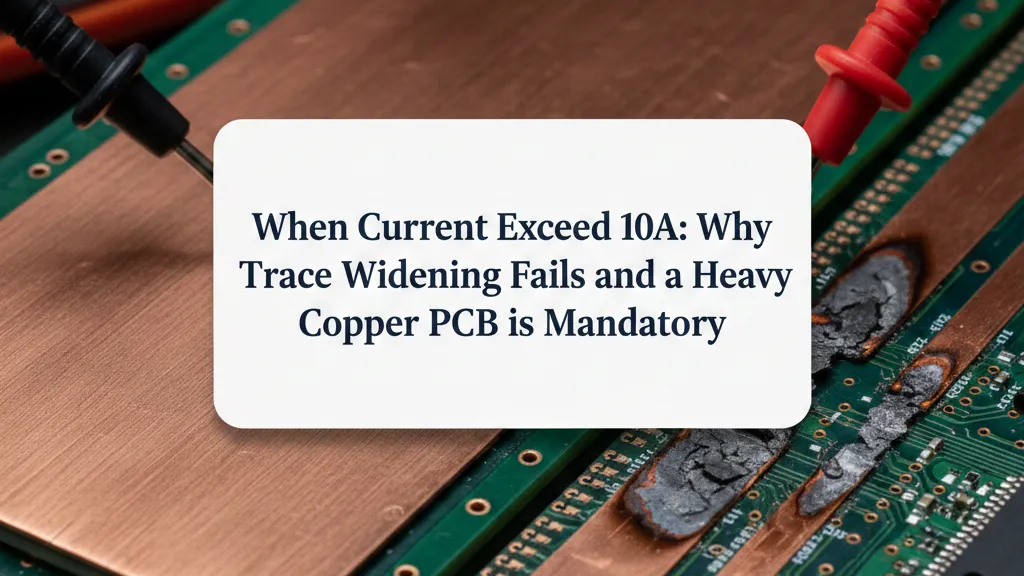
Why Trace Widening Fails and a Heavy Copper PCB is Mandatory
For power design engineers pushing the limits in electric vehicles, server racks, or industrial drives, a common and costly assumption persists: to carry more current, simply widen the copper trace. However, when currents surpass the 10A threshold, this approach not only fails but can actively undermine reliability. This article moves beyond basic IPC-2152 charts to…

PCB Stackup Calculator and Manufacturing Precision: Ensuring “Calculation Equals Reality” in Impedance Control
Every high-speed digital or RF engineer has experienced this frustration: your PCB stackup calculator shows perfect 50Ω impedance, but the physical board measures 42Ω or 58Ω. This gap between calculation and reality isn’t just a minor discrepancy—it’s a direct threat to signal integrity, system performance, and project timelines. The problem isn’t your calculator; it’s the…