1. Why Blind and Buried Via PCB Matters for Modern Electronics
With the rapid development of industrial automation, automotive electronics, medical devices, and communication systems in Germany, PCB designs are becoming increasingly compact and high-density.
Traditional through-hole PCBs can no longer meet these requirements.
This is where Blind Via and Buried Via PCB technology (HDI PCB technology) becomes essential.
For German EMS companies and OEM manufacturers, this technology is critical to:
- Reduce board size
- Increase routing density
- Improve electrical performance
- Support high-layer-count designs
2. What is Blind Via PCB?
A Blind Via connects an outer layer to one or more inner layers, but does not go through the entire PCB.
Key Features:
- Improves routing space on inner layers
- Ideal for high-density interconnect (HDI) designs
- Common in 4–12 layer PCBs and above
Typical Applications:
- Automotive control units (ECU)
- Industrial sensors
- Communication modules
3. What is Buried Via PCB?
A Buried Via connects internal layers only and is completely hidden from the outer layers.
Key Features:
- No impact on outer layer routing
- Allows higher component density
- Improves signal integrity
Typical Applications:
- Medical electronics
- High-speed digital systems
- Aerospace and defense electronics
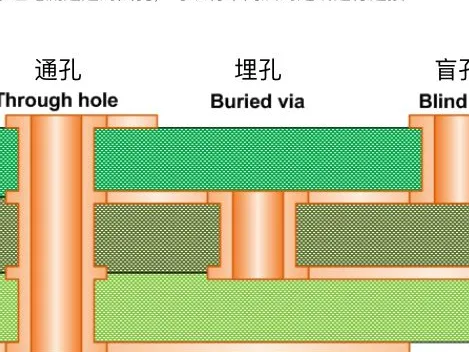
4. Blind + Buried Via Combination (HDI PCB Structure)
In advanced PCB designs, Blind and Buried vias are often combined to form HDI stack-up structures.
Advantages:
- Higher routing density (critical for miniaturization)
- Better signal integrity (important for high-speed design)
- Reduced EMI interference
- Supports fine-pitch BGA components
This technology is widely used in:
- Automotive radar systems in Germany
- Industrial control systems
- High-end EMS manufacturing projects
5. Manufacturing Challenges (Why Not All Suppliers Can Do It)
For EMS companies in Germany, choosing the right PCB supplier is critical.
Blind & buried via PCB manufacturing requires:
- Precise layer alignment
- Advanced lamination process control
- Laser drilling technology
- Strict impedance control capability
- Stable yield on multilayer HDI boards
Many low-end suppliers cannot guarantee:
- Layer registration accuracy
- Via reliability under thermal stress
- Consistent mass production quality
6. Our Jerico Capability as a PCB Manufacturer for EMS Companies
We support advanced PCB manufacturing for German EMS and OEM customers, including:
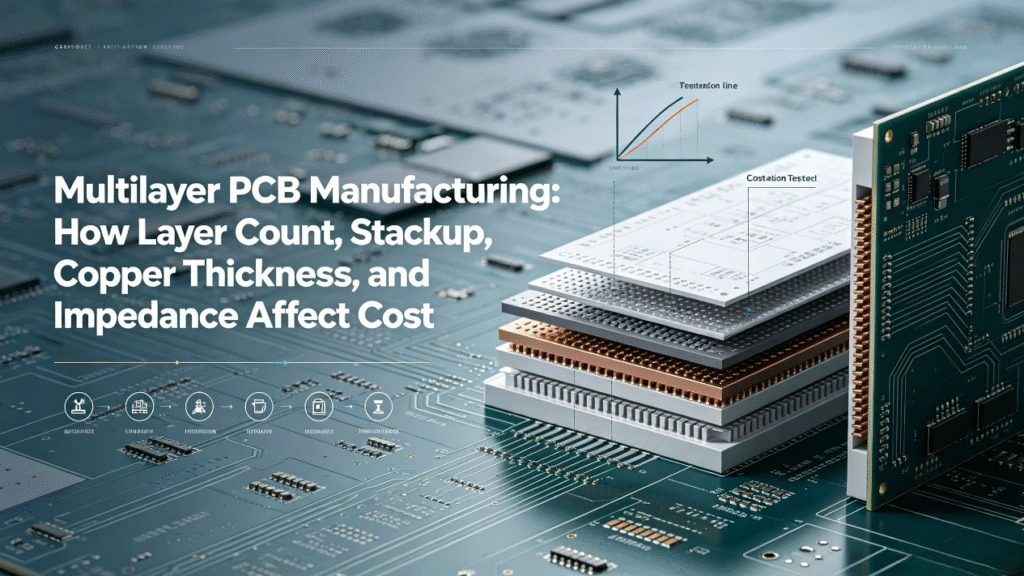
- HDI PCB (1+N+1 / 2+N+2 structures)
- Blind via & buried via boards
- High layer count PCB (up to 20+ layers)
- Controlled impedance PCB
- Fast prototype & small batch production
Industries we support:
- Automotive electronics
- Industrial automation
- Medical devices
- Communication equipment
7. Why German EMS Companies Choose Asian PCB Partners
Many EMS companies in Germany face challenges such as:
- High local PCB production cost
- Long lead time
- Limited HDI capability for prototypes
By cooperating with a qualified PCB manufacturer in Asia, EMS companies can achieve:
- 30–50% cost reduction
- Faster prototyping cycles
- Flexible low-volume production
- Access to advanced HDI technologies
8. Jerico’s Quality Assurance & Reliability
We understand that for German EMS standards, reliability is non-negotiable.
Our quality control includes:
- AOI inspection (100%)
- X-ray inspection for vias
- Impedance testing
- Thermal cycling reliability tests
- IPC Class 2 / Class 3 standards support
9. Conclusion: Build High-Performance Electronics with Advanced PCB Technology
Blind and Buried Via PCB technology is no longer optional—it is essential for modern electronic design.
Whether you are developing:
- Automotive systems
- Industrial controllers
- High-speed communication devices
Choosing the right PCB manufacturing partner directly affects your product performance and time-to-market. Jerico is your best choice.
We are ready to support your project. Send us your Gerber files today and get a fast quotation within 24 hours.