As automotive electronics continue to evolve, the reliability requirements for printed circuit boards (PCBs) have become significantly more demanding. Modern vehicles now integrate a wide range of electronic systems, including advanced driver assistance systems (ADAS), engine control units (ECUs), battery management systems (BMS), and vehicle communication modules. These systems rely heavily on high-performance PCBs that must operate reliably for more than a decade.
Among the many reliability challenges in automotive electronics, Conductive Anodic Filament (CAF) has become one of the most critical failure mechanisms that PCB designers and manufacturers must address.
What is CAF?
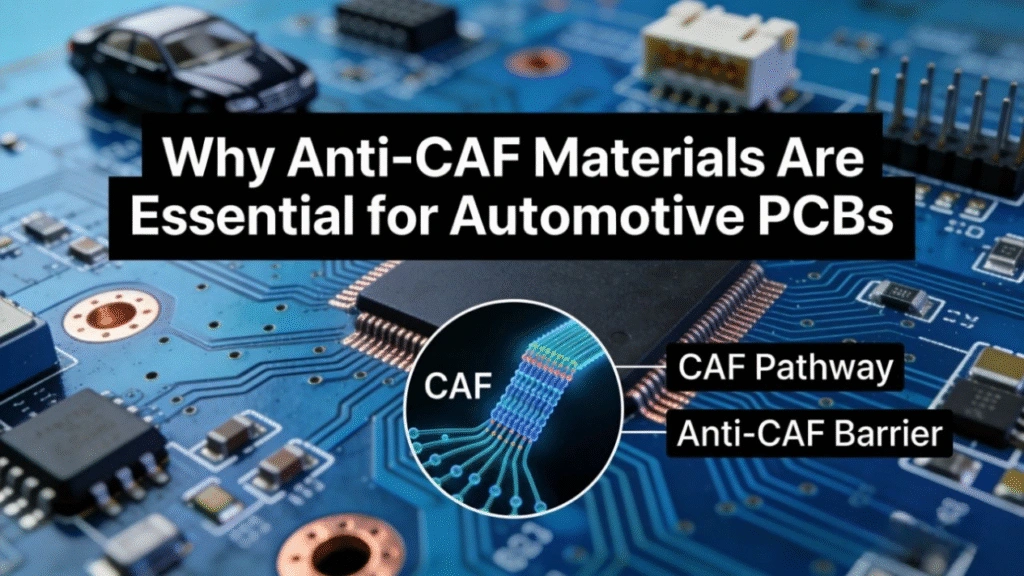
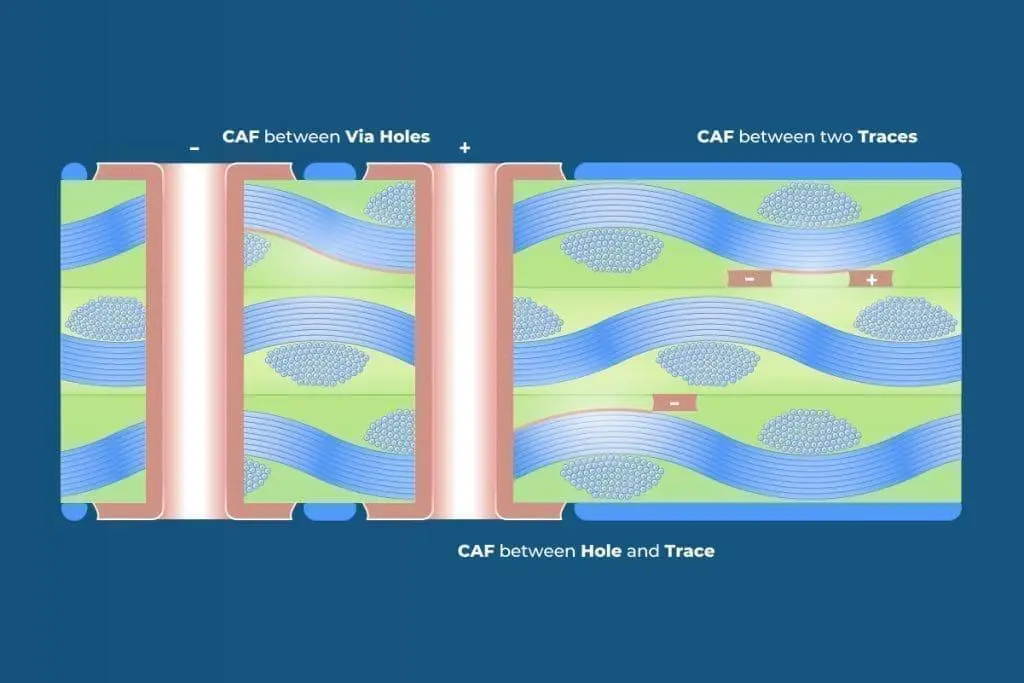
CAF, or Conductive Anodic Filament, is an electrochemical failure mechanism that occurs inside the PCB laminate, typically along the interface between glass fibers and resin.
Under certain environmental conditions, copper ions migrate through the laminate and gradually form conductive filaments between two biased conductors. Over time, these conductive paths grow and may eventually cause electrical leakage or even short circuits.
Unlike many other PCB defects that are visible during inspection, CAF growth occurs internally within the laminate structure, making it a hidden reliability risk.
Conditions That Lead to CAF Formation
CAF formation generally requires three key factors:
1. Moisture presence
Moisture can penetrate the PCB laminate and create an electrolyte environment that enables ionic movement.
2. Electrical bias
A voltage difference between conductors drives copper ion migration.
3. Weak fiber-resin interface
Imperfections or poor bonding between glass fibers and resin can create pathways for ion migration.
When these factors combine over long periods, conductive filaments may develop between adjacent vias, traces, or plated through holes.
Compared with consumer electronics, automotive PCBs operate under significantly harsher conditions.
Why Automotive PCBs Are More Susceptible to CAF
1. Long product lifetime
Automotive electronics are typically required to function reliably for 10–15 years, far exceeding the lifecycle of consumer devices.
2. Elevated operating temperatures
Electronic modules located in engine compartments may experience temperatures exceeding 125°C, accelerating electrochemical processes.
3. High humidity and condensation
Vehicles frequently encounter temperature cycling and humid environments, which can lead to moisture absorption and condensation inside electronic assemblies.
4. Higher circuit density
Modern automotive PCBs often use:
multilayer stackups
HDI structures
fine-pitch components
These designs reduce spacing between conductors, increasing the risk of CAF formation.
Because of these factors, automotive electronics place much stricter requirements on PCB laminate materials.
How Anti-CAF Materials Improve Reliability
To mitigate CAF risks, PCB manufacturers increasingly use anti-CAF laminate materials specifically engineered to resist conductive filament formation.
These materials incorporate several key improvements.
1. Improved glass fiber treatment
Enhanced surface treatment of glass fibers improves the bonding between fibers and resin, reducing the likelihood of micro-channels forming along the interface.
2. Optimized resin systems
Advanced resin formulations reduce moisture absorption and limit ion mobility within the laminate structure.
3. Higher CTI performance
Automotive laminates typically feature higher Comparative Tracking Index (CTI) values, which improve electrical insulation reliability under high humidity conditions.
4. Enhanced thermal performance
Many automotive PCB materials also offer:
High Tg (typically >150°C)
Low coefficient of thermal expansion (CTE)
Improved thermal stability
These characteristics help ensure long-term reliability under automotive operating conditions.
Examples of commonly used automotive-grade materials include high-reliability FR-4 laminates such as anti-CAF Tg150+ systems widely adopted across the automotive electronics industry.
The Growing Importance of Material Selection
As automotive electronics continue to grow in complexity, PCB material selection is becoming increasingly critical during the design stage.
Engineers must consider not only electrical performance and cost but also long-term reliability risks such as CAF formation. Selecting laminate materials with strong anti-CAF properties is now a key strategy to ensure stable operation throughout the vehicle’s lifetime.
For PCB manufacturers and electronics designers alike, understanding CAF mechanisms and choosing appropriate laminate systems are essential steps toward building high-reliability automotive electronics.
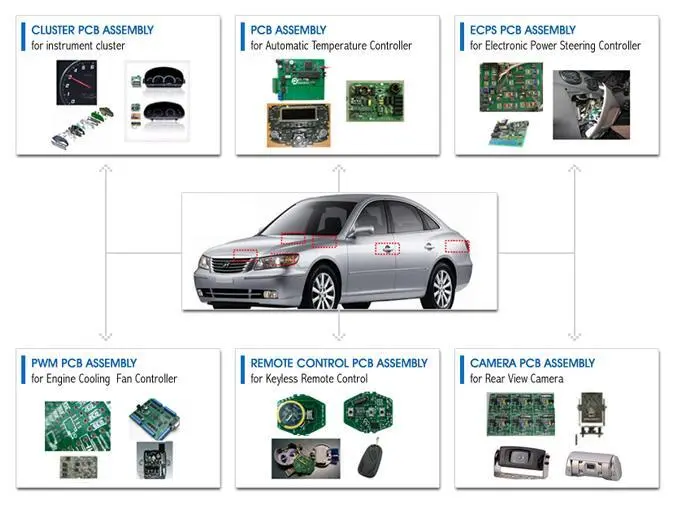
Why Choose Jerico as Your automotive board Partner?
Jerico as your automotive PCB partner means working with a supplier that understands the strict reliability and safety requirements of automotive electronics. We focus on high-performance materials, including anti-CAF solutions, high-Tg laminates, and stable dielectric materials suitable for harsh environments such as high temperature, humidity, and vibration. Our experience in multilayer, HDI, and heavy copper boards ensures support for applications like power control, ADAS, and EV systems.
At the same time, we help customers optimize cost and performance through stack-up design and material selection, not just manufacturing. With stable quality control, fast response, and flexible support for both prototype and mass production, Jerico is committed to being a long-term, dependable partner for your automotive PCB/PCBA needs.
Contact us whenever you need!