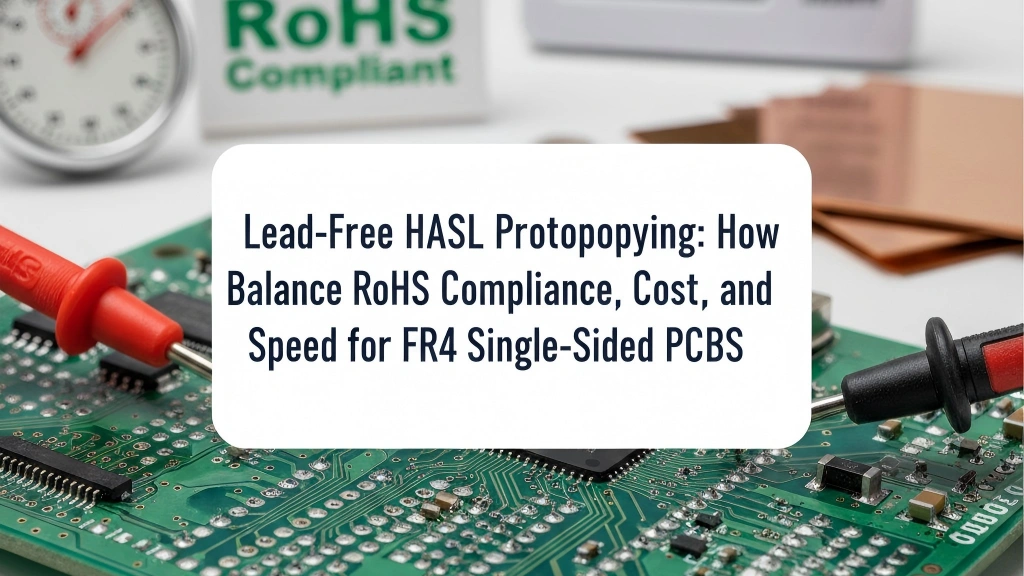
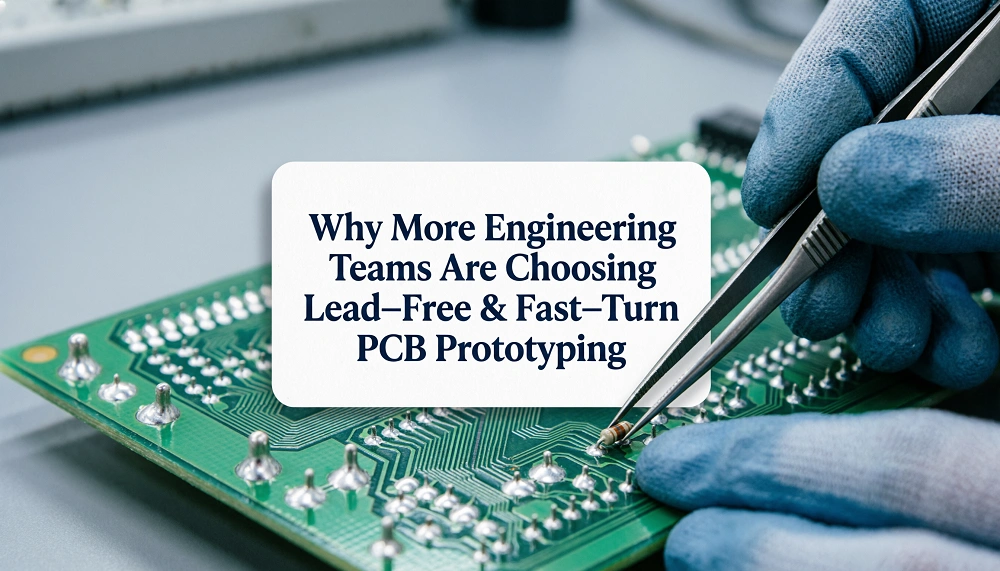
In today’s global electronics landscape, balancing environmental compliance, rapid development, and cost efficiency has become a daily challenge for design engineers and NPI managers. Projects destined for the U.S. or Europe often face strict RoHS and REACH audits. Yet many teams still rely on tin‑lead finishes, resulting in delayed approvals, failed audits, and unplanned redesigns. When paired with unstable supplier lead times, a three‑week spin on a simple PCB prototype can derail an entire go‑to‑market schedule. Jerico helps teams move beyond these roadblocks by delivering factory‑direct, no‑MOQ, 24‑hour lead‑free PCB prototypes engineered for smooth transition into mass production.
How Compliance and Speed Define Modern PCB Success
When a project’s export destination covers the EU or North America, lead‑free processing becomes non‑negotiable. However, small engineering outfits and startups often face inconsistent documentation or limited supplier capabilities. Some PCB vendors only offer HASL (Sn‑Pb), lacking formal RoHS declarations or third‑party testing data. This creates a compliance gap that can ripple through the supply chain. Jerico’s lead‑free HASL and ENIG lines are fully validated under IPC Class 3, ISO9001, IATF16949, and UL certification, providing engineers with guaranteed documentation packs—including material declarations, RoHS certificates, and UL marking—for any audit scenario.
From Prototype to Production: Why “It Works” Isn’t Enough
Producing a functional board is only half the story. Many NPI programs fail in later stages because prototype suppliers lack the process control needed for volume transfer. A board that performs well in lab testing might show solder‑joint reliability issues once thermal cycles increase during mass production. Jerico aligns prototype windows with production‑level controls, minimizing parameter drift across runs.
- Environmental & legal risk: Lead content detected above 1000 ppm can disqualify shipments, impose redesign, or trigger regulatory reports.
- Cost & timeline pressure: Frequent design changes during NPI mean small batches, fragmented orders, and communication gaps. Jerico’s unified platform centralizes fabrication and DFM review, reducing re‑quotation loops.
- Quality unpredictability: Sourcing from multiple low‑volume suppliers introduces stack‑up variations and inconsistent copper weights—issues visible only after failure analysis.
What Is Lead‑Free HASL and How Does It Compare to Tin‑Lead HASL?
Lead‑free Hot Air Solder Leveling (HASL) uses a tin‑silver‑copper alloy (Sn‑Ag‑Cu) instead of the traditional Sn‑Pb mixture. This alternative alloy exhibits a melting range of roughly 217–221 °C—about 35–40 °C higher than Sn‑Pb—which demands tighter thermal control but eliminates hazardous lead. While higher reflow temperature could stress substrates, Jerico’s controlled pre‑bake process stabilizes the laminate to resist delamination and measurably improves wetting uniformity across vias and pads.
| Feature | Lead–Free HASL (Sn‑Ag‑Cu) | Lead HASL (Sn‑Pb) |
|---|---|---|
| Regulatory compliance | Fully compliant with RoHS / REACH | Fails RoHS limit (>0.1 % Pb) |
| Surface flatness | Moderate, suitable for through‑hole and medium‑pitch SMD | Slightly smoother, but non‑compliant |
| Thermal shock performance | Excellent under controlled pre‑bake | Good, lower stress window |
| Typical use case | RoHS consumer, automotive, industrial electronics | Legacy repair or exempt medical/defense |
The lead‑free transition also standardizes the future export process. For customers in automotive or white‑goods sectors, internal audits frequently expect every PCB supplier to maintain a RoHS 2 / REACH compliance binder that can be referenced during yearly supplier evaluations. Jerico provides these documents once your job enters the system—no additional requests required.
Why FR4 Single‑Sided Boards Remain the Best Value Configuration
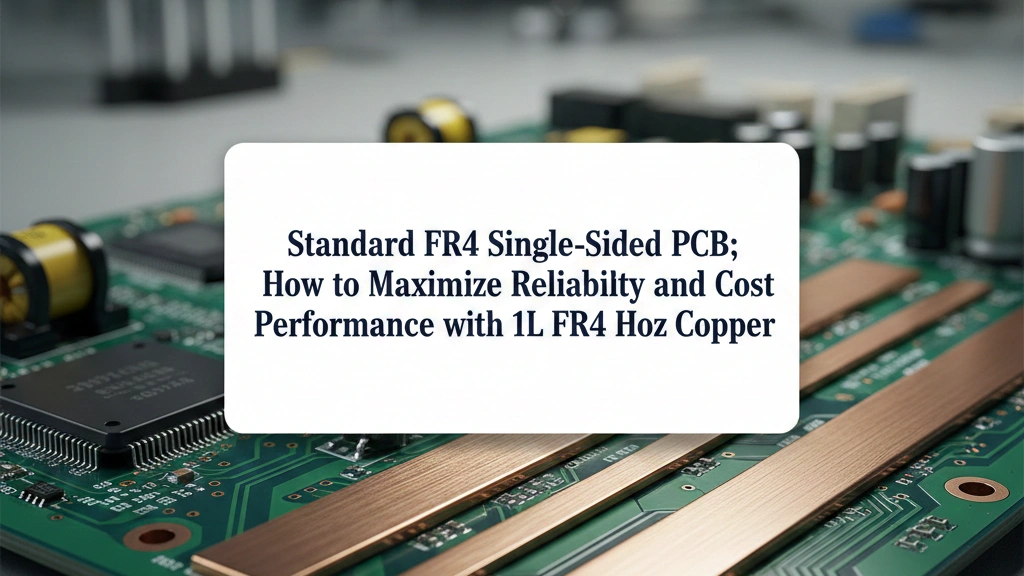
For early‑stage product validation, FR4 single‑layer PCBs with ½ oz copper often deliver the ideal compromise between durability, performance, and budget. These boards handle low‑to‑moderate current circuits—such as adapter modules, sensor interfaces, and appliance control boards—without the design complexity of multilayer stacks. The glass‑epoxy FR4 dielectric ensures excellent mechanical strength and thermal stability under lead‑free reflow profiles.
- Durability vs. thickness: 1‑layer FR4 + 0.5 oz copper achieves 35 µm copper thickness, sufficient for trace widths of ≥ 8 mil carrying up to 2 A.
- Visual management: Green solder mask provides reliable curing and superior contrast during optical inspection; white silkscreen simplifies troubleshooting and assembly alignment.
- Cost control: Simulation shows FR4 / 0.5 oz configuration cuts unit price by nearly 30 % compared with 2‑layer equivalents in prototype quantities.
Overall, this configuration becomes the “workhorse” for proof‑of‑concept design rounds before committing to multilayer or rigid‑flex evolution. Jerico maintains standardized FR4 inventories, enabling sub‑24 h turnaround even during high‑volume months.
How Jerico Standardizes Lead‑Free Prototyping
From Gerber to Finished Board: A Streamlined One‑Stop Process
Jerico’s direct‑from‑factory workflow removes broker layers. Engineers upload Gerber, BOM, or stack‑up notes directly to Jerico’s secure portal. Every order triggers an internal DFM (Design for Manufacturing) review, where process engineers evaluate drill dimensions, copper spacing, and potential impedance or creepage concerns. Once cleared, boards move through a dedicated sample line sized for small‑batch flexibility. The process checklist encourages designers to confirm upfront:
- Layer structure — 1 L FR4 / 0.5 oz Cu
- Surface finish — HASL Lead‑Free
- Solder mask / silkscreen — Green / White
- Document options — RoHS Statement, UL Number, PPAP Files (if automotive)
- Target lead time — Standard or 24–48 h Express
This pre‑submission checklist minimizes missing data and keeps email turnaround under two cycles. Jerico’s engineers communicate directly with design teams, not through intermediaries—resulting in clear accountability and faster revisions.
How 24–48 Hour Express Delivery Works Behind the Scenes
To sustain true short‑run agility, Jerico separates prototype production lines from mass orders. The internal 60,000 m² monthly capacity ensures small orders are never deprioritized. Once a Gerber passes DFM, it enters an auto‑scheduling queue optimized for single‑layer, lead‑free panels. Pre‑baked FR4 sheets, standardized stencil tooling, and predefined HASL temperature profiles slash setup time by almost 40 %. Key control points include:
- AOI inspection at imaging and post‑etch stages.
- Solder‑mask curing curve validation to prevent under‑cure blistering.
- Solder thickness and wetting test coupons checked per IPC Class 3 limits.
These in‑process metrics simulate full‑production reliability, ensuring that prototype results extrapolate accurately into the volume build phase—so what passes today in R&D remains consistent tomorrow in manufacturing.
Case Insight: How a Power Adapter Brand Accelerated Its NPI Cycle
A mid‑size power‑adapter company recently transitioned from dual‑layer tin‑lead PCBs to FR4 lead‑free single‑layer boards. Using Jerico’s 24‑hour run, engineers completed three design iterations in under one week. The team optimized pad geometry and clearance without inflating budget. Upon audit, their assemblies passed RoHS verification at < 500 ppm Pb — a fraction of allowable limits — and the NPI cycle contracted by 32 %. The supplier audit highlighted Jerico’s complete UL and RoHS package as a differentiator.
Where to Go Next: Planning Future Upgrades
Once your validation succeeds, future product versions may demand higher current, compact layout, or mechanical flexibility. Jerico’s integrated product matrix allows seamless migration within the same supplier ecosystem:
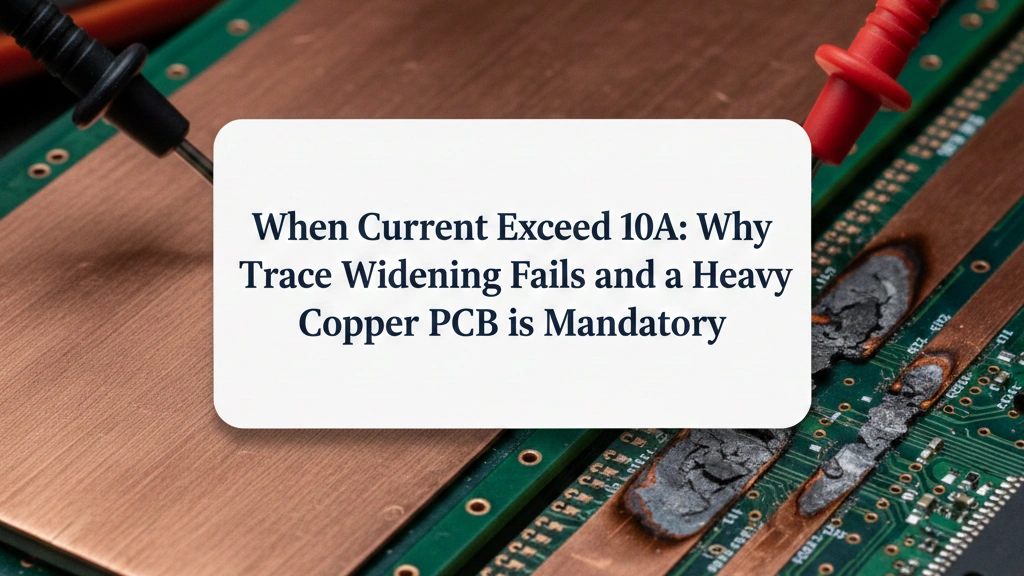
- Heavy Copper PCB — for next‑gen power stages and converters requiring ≥ 3 oz Cu.
- HDI PCB — for communication or IoT modules needing fine‑pitch vias and higher component density.
- Rigid‑Flex PCB — ideal for foldable geometries and connector reduction in wearable or automotive systems.
By keeping all technologies under one qualified supplier, teams avoid costly re‑qualification or mechanical re‑tuning when scaling designs upward.
Why Choose Jerico as Your Long‑Term Lead‑Free PCB Partner
- 25 years PCB manufacturing expertise across rigid, multilayer, HDI, heavy copper, ceramic, and hybrid boards.
- Certified to ISO9001, IATF16949, UL, and IPC Class 3 standards for automotive and industrial electronics.
- Factory‑direct, zero middlemen: Transparent pricing, real‑time status, and direct access to process engineers.
- Consistent supply chain: From one‑off prototypes to mid‑batch pilot and mass production within the same quality framework.
Jerico bridges R&D and production without the risk of process resets, helping teams comply with environmental mandates while keeping innovation velocity high.
Start Your Next Project Today
- Upload Gerber / BOM files to get a lead‑free engineering review and quotation within 24 hours.
- Schedule an online discussion with Jerico experts about migrating from tin‑lead to lead‑free and scaling to HDI designs.
- Request a pilot‑run offer for your first lead‑free prototype and verify our speed and quality on a real project.